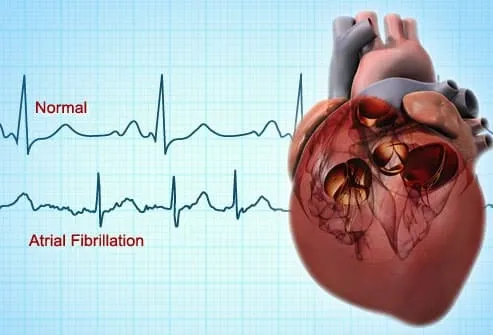
What is Atrial Fibrillation?
Atrial fibrillation is an irregular, often rapid heart rate (arrhythmia) that commonly causes poor blood flow. The heart’s upper chambers (atria) beat out of coordination with the lower chambers (ventricles). This condition may have no symptoms, but when symptoms do appear they include palpitations, shortness of breath, and fatigue.
Risks Of Atrial Fibrillation
- Atrial fibrillation increases stroke rate 3-5 times
- Atrial fibrillation is responsible for 15-20% of all strokes
- Atrial fibrillation increases death rate 2 fold
Maze Procedure for Atrial Fibrillation
- The surgical treatment for atrial fibrillation
- Also known as Surgical Ablation
- Using radio waves, freezing, microwave, or ultrasound energy scar tissue is created in the atria (top chambers) of the heart
- The scar tissue blocks the abnormal conduction of electrical signals
- The correct signals are directed along a path, or maze to the ventricles (lower chambers) of the heart
- Can be performed alone or as part of any other open heart surgery
- Can be performed minimally invasive
Indications for Maze Procedure
- Rhythm-control medication has not relieved your symptoms
- You have atrial fibrillation and are undergoing heart surgery for another reason
- You cannot have catheter ablation
- You have already had catheter ablation, but still have atrial fibrillation
What to Expect After Surgery
- Depending on how the surgery was performed will determine short term recovery
- You may need to take anticoagulants after the procedure
- Recovery is typically 6-8 weeks following surgery (may be shorter if performed minimally invasive)
- The Maze procedure can stop atrial fibrillation in 7-9 people out of 10
- 10-30% may still need to take medication to control their heart rhythm
- Some patients undergoing the Maze Procedure may need a pacemaker after the procedure and this is thought to be due to underlying disease of the SA node.
Ranked # 1
Sarasota Memorial Hospital has been ranked #1 for Best Hospitals for Heart Attack Care. Set up a consultation today with Dr. Hoffberger: 941-917-8791