Aortic Stenosis
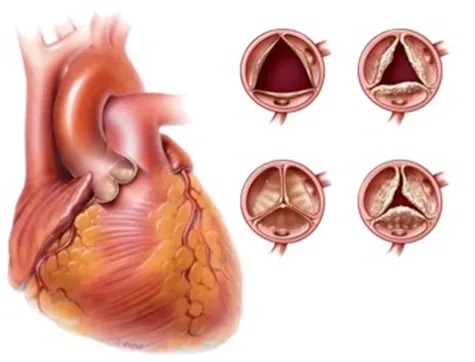
Aortic Stenosis occurs when the aortic valve doesn’t open as it should. This causes the heart to work harder to pump blood through the valve. As pressure builds up in the left ventricle, the heart muscle thickens. As time goes on, the heart muscle won’t be able to keep up with the extra effort to pump blood through the stenotic valve. Eventually, this leads to heart failure.
Common causes of aortic stenosis is calcium buildup on the valve usually from age, a heart valve defect you were born with, rheumatic fever, or endocarditis.
Symptoms associated with aortic stenosis is chest pain, feeling dizzy or faint, shortness of breath, fatigue, or palpitations. If you notice any of these symptoms, you should let your doctor know right away.
Aortic Regurgitation
Aortic Regurgitation occurs when the aortic valve doesn’t close as it should. With each heartbeat, some blood leaks back through the aortic valve into the left ventricle. Because the body does not get enough blood with each heartbeat, the heart has to make up for it.
Common causes of aortic regurgitation are bicuspid aortic valve, aging, high blood pressure, rheumatic fever, endocarditis, and aortic dissection or aneurysm. As aortic regurgitation worsens, patients begin to experience signs and symptoms of fatigue, weakness, shortness of breath, palpitations, chest pain and eventually fainting.
Treatment
If you need aortic valve replacement or repair, you may be a candidate for minimally invasive cardiac surgery. Call to set up a consultation with Dr. Hoffberger today: 941-917-8791
Dr. Hoffberger and his team at Sarasota Memorial Hospital have been rated 3-stars, the highest category of quality, from The Society of Thoracic Surgeons. This recognition is for patient care and outcomes in all five adult cardiac surgery procedures: Isolated Coronary Artery Bypass (CABG), Isolated Aortic Valve Replacement (AVR), AVR + CABG, Isolated Mitral Valve Replacement/Repair (MVRR) and MVRR + CABG.
The least invasive approach to aortic valve replacement.